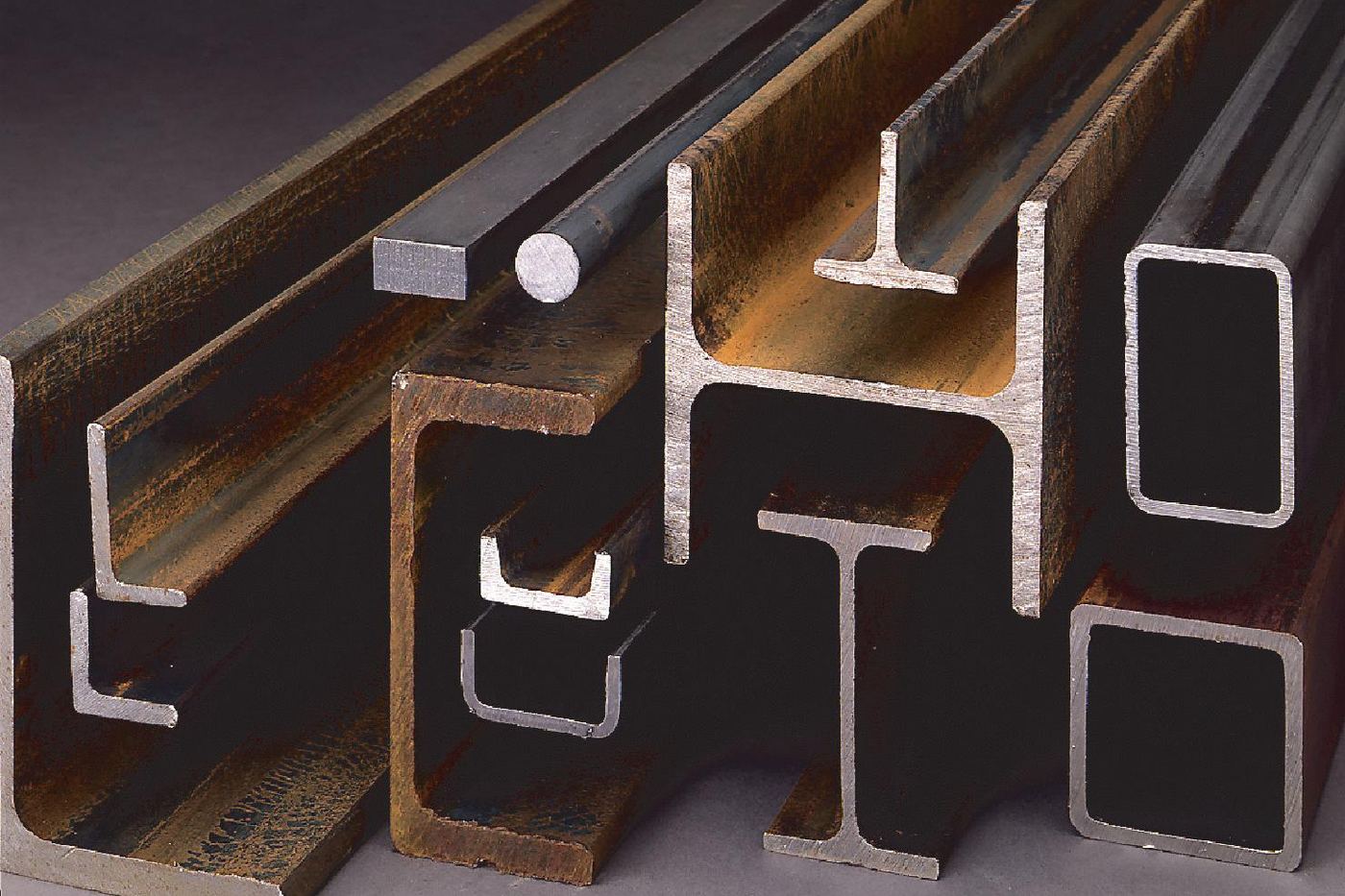
Angle, channel, beam and flat bar are the bones of most fab work: trailer frames, mezzanines, cattle guards, equipment skids, brackets and gussets. We source hot rolled structural shapes in the common grades, arrange the saw cuts to your lengths, and deliver to shops across Texas. One list, one contact, one quote.
What each shape is for and how to choose
Angle is the workhorse for frames, bracing, shelf edges and clip angles. Equal-leg angle is the default. Unequal-leg angle earns its place when one leg bolts to something and the other carries the load. Channel gives you a flat back to weld or bolt against and stiffness in one direction, which is why it shows up in trailer tongues, crossmembers and stair stringers. MC channel runs heavier than C channel at the same depth and is common on trailer frames.
Wide flange (W) beams have parallel flanges and carry most building and heavy equipment loads. S-beams (American Standard I-beams) have narrower, tapered flanges and still show up on hoist and trolley beams. Flat bar covers gussets, tabs, base plates on light work, straps and hitch parts.
Pick the shape by how the load travels, then the grade by what the drawing or code calls for. If you are unsure between two sizes, the metal weight calculator helps you compare weight per foot, which is most of what drives the cost of a structural order.
Grades
| Grade / spec | Why pick it | Watch out for |
|---|---|---|
| A36 | The default for angle, channel, flat bar and S-beams. 36 ksi minimum yield, welds easily with common processes. | Engineered drawings may call for 50 ksi. Don't substitute down. |
| A572 Grade 50 | 50 ksi minimum yield, so a lighter section can carry the same load. Common on channel and angle for trailer and equipment frames. | Confirm the spec with your engineer before swapping it for A36 on a stamped drawing. |
| A992 | The standard spec for W-beams, 50 ksi yield with a controlled chemistry. Most wide flange is produced to it. | Many shapes are dual-certified A36/A572-50 or A992/A572-50. Ask for the cert if an inspector will. |
Need traceability for an inspector or a customer? Mill certs are available on request; say so on the quote.
Common sizes
| Shape | Commonly available range | Typical mill lengths |
|---|---|---|
| Equal-leg angle | 1/2" x 1/2" x 1/8" up to 8" x 8" x 1"; 2", 3" and 4" legs in 3/16" and 1/4" are everyday sizes | 20', 40' |
| Unequal-leg angle | 2" x 1-1/2" up to 8" x 6" in common thicknesses | 20', 40' |
| C channel | 3" to 15" deep (e.g. C4 x 5.4, C6 x 8.2, C8 x 11.5) | 20', 40' |
| MC channel | 6" to 18" deep (e.g. MC6 x 12, MC8 x 8.5) | 20', 40' |
| W-beam | W4 x 13 up through W12, W14 and deeper; W6, W8 and W10 are common for fab shops | 20', 40' and longer |
| S-beam | S3 x 5.7 up to S12 and larger | 20', 40' |
| Hot rolled flat bar | 1/8" to 1" thick, 1/2" to 12" wide | 20' |
Sizes only. Metal prices move daily, so every order is quoted.
Cut-to-size options
Most structural orders are straight saw cuts to length, which gives a square, clean end ready to fit and weld. We can also arrange miter cuts on angle and channel for frames, and torch or plasma work on heavy beams where a coped or notched end is needed to fit against another member. Cuts are arranged through our supply network, and the method goes on your quote.
Cut pieces save you drop, saw time and hauling 40' beams. For long runs, full lengths are often the better buy; we'll say which fits your list.
What to include in your quote request
- Shape and full size, e.g. "L3 x 3 x 1/4" or "W8 x 18", rather than "3 inch angle"
- Grade or spec if the drawing names one (A36, A572-50, A992)
- Cut lengths and piece count, or full sticks
- Any miters, copes or notches, with a sketch if you have one
- Whether you need mill certs
- Delivery address or city, and any site limits for a long load