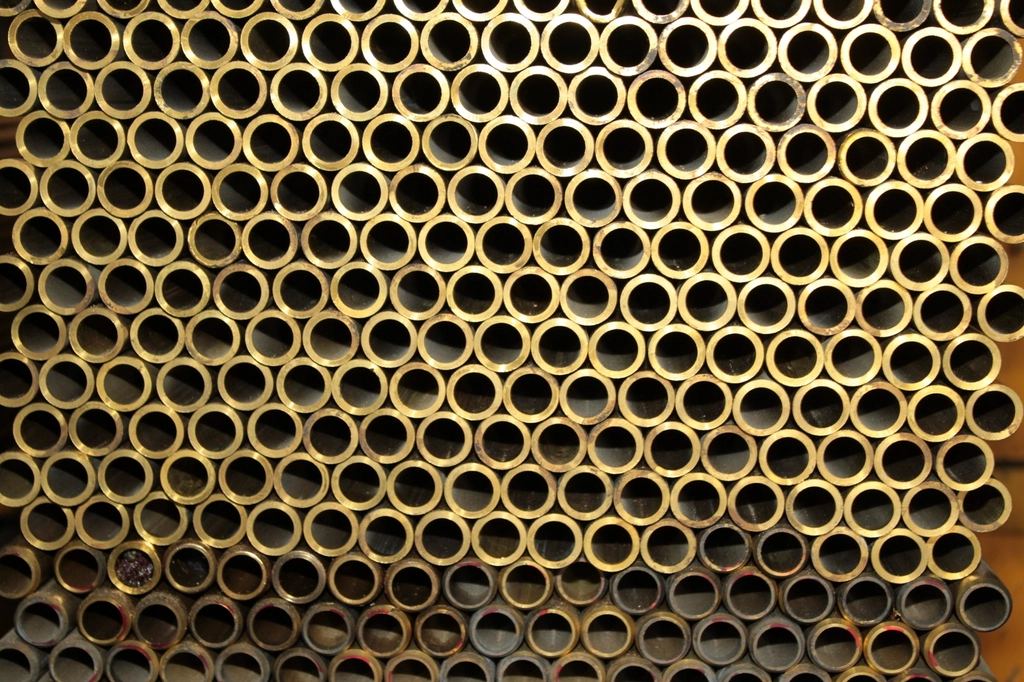
Red metals do jobs steel and aluminum can't. Brass machines faster than almost anything, bronze makes a bearing surface that runs against steel, and copper carries current and heat better than any common metal. We source brass rod and sheet, bearing and aluminum bronze, and copper sheet, plate and bus bar for Texas machine shops, marine shops, electrical builders and sign makers.
What shops use these alloys for
Machine shops run C360 brass rod for fittings, valve parts and turned components because it's the benchmark free-machining alloy. C260 cartridge brass is the forming grade for sheet work, trim and signs. C932 bearing bronze, also called SAE 660, is the standard for bushings and wear strips. C954 aluminum bronze is much stronger and handles heavy loads, marine hardware and pump parts. Copper sheet and bus bar in C110 go into electrical panels, grounding, heat sinks and decorative work, with C101 oxygen-free copper for high-conductivity and vacuum or brazed parts.
One thing to flag early: C360 carries lead to make it free cutting. Parts that touch drinking water need a lead-free brass, so tell us if that applies.
Common brass, bronze and copper grades
| Grade | Key traits | Typical uses |
|---|---|---|
| C360 free-cutting brass | Best machinability of any common alloy, contains lead | Fittings, valve stems, screw-machine parts |
| C260 cartridge brass | 70/30 brass, excellent for forming and drawing | Sheet work, trim, signs, stampings |
| C932 bearing bronze (SAE 660) | Good wear against steel, easy to machine | Bushings, bearings, thrust washers, wear plates |
| C954 aluminum bronze | High strength and wear resistance, good in salt water | Heavy-duty bushings, gears, marine and pump parts |
| C110 copper (ETP) | High electrical and thermal conductivity, very formable | Bus bar, grounding, heat sinks, architectural |
| C101 oxygen-free copper | Highest purity, suited to brazing and vacuum work | High-conductivity electrical parts, vacuum components |
Forms available
Brass comes as round, hex, square and flat rod plus sheet and plate. Bearing bronze is usually cast bar, solid or cored, so you can start a bushing from a tube instead of boring a solid. Aluminum bronze comes as rod and cast bar. Copper comes as sheet (often specified by ounce weight in architectural work), plate, round rod and bus bar with square or rounded edges.
Typical size ranges
| Form | Commonly available range |
|---|---|
| C360 round rod | 1/8" to 4" diameter, larger to order; 12' lengths |
| C360 hex rod | 1/8" to about 2" across flats |
| Brass and copper sheet | 0.010" to 0.125" thick; 24" x 96", 36" x 96" and 48" x 120" sheets |
| Copper plate | 3/16" to 2" thick |
| Copper bus bar | 1/8" to 1/2" thick, 1/2" to 6" wide; 12' lengths common |
| Bearing bronze cast bar | Solid 1/2" to about 10" diameter; cored bar in many ID and OD combinations |
Commonly available ranges. Ask for anything outside them.
Cutting options
Rod, bar and bus bar are saw cut to length. Sheet and plate shapes are best on waterjet, since copper and brass reflect laser light and conduct heat away from the cut. Fiber lasers can handle thin brass and copper, but thicker material and tight tolerances go to waterjet. Plasma leaves a poor edge on these alloys and isn't a good fit.
Mill certs
Certs for copper alloys list the UNS number, chemistry and temper against specs like ASTM B16 for C360 rod, B36 for brass sheet, B505 for cast bronze bar, B152 for copper sheet and B187 for bus bar. Electrical and marine customers often ask for them, and lead content is on the cert if you need to show it. We can get mill certs on request.