Aluminum is light, doesn't rust, machines fast and welds well in the right alloy. We source sheet, plate, bar, tube, extrusions and tread plate for Texas machine shops, trailer builders, sign makers and marine fabricators, and we arrange the cut so the pieces show up ready for the job. The trick is matching the alloy and temper to the work, because the wrong one cracks on the brake or won't hold a thread.
What shops use aluminum for
Machine shops run 6061 bar and plate for fixtures, brackets and housings, and 7075 when the part needs strength close to mild steel at a third of the weight. Trailer and truck-body builders use 5052 sheet for skins and fenders, 6061 extrusions for frames and crossmembers, and 3003 tread plate for floors and toolboxes. Marine shops want 5052 and 5086 because they hold up in salt water. Sign makers cut 3003 and 5052 sheet because it takes paint and bends cleanly.
The one rule that saves the most scrap: 5052-H32 bends tight without cracking, 6061-T6 does not. If the part gets formed, spec 5052 or 3003. If it gets machined or welded as a structure, spec 6061. Our aluminum alloy and temper guide goes deeper on tempers.
Common aluminum grades
| Grade | Key traits | Typical uses |
|---|---|---|
| 3003-H14 | Soft, very formable, lowest strength of the group | Tread plate, trim, ductwork, signs |
| 5052-H32 | Bends tight, good corrosion resistance, weldable | Trailer skins, fenders, boat parts, enclosures |
| 5086-H116 | Stronger marine alloy, rated for salt water | Hulls, decks, marine structures |
| 6061-T6 / T651 | Machines and welds well, medium strength, cracks on tight bends | Machined parts, frames, fixtures, extrusions |
| 6063-T52 | Smooth extruded finish, lower strength than 6061 | Architectural trim, handrail, light frames |
| 7075-T6 / T651 | Very high strength, poor weldability | Aerospace-style parts, tooling, high-load components |
Forms available
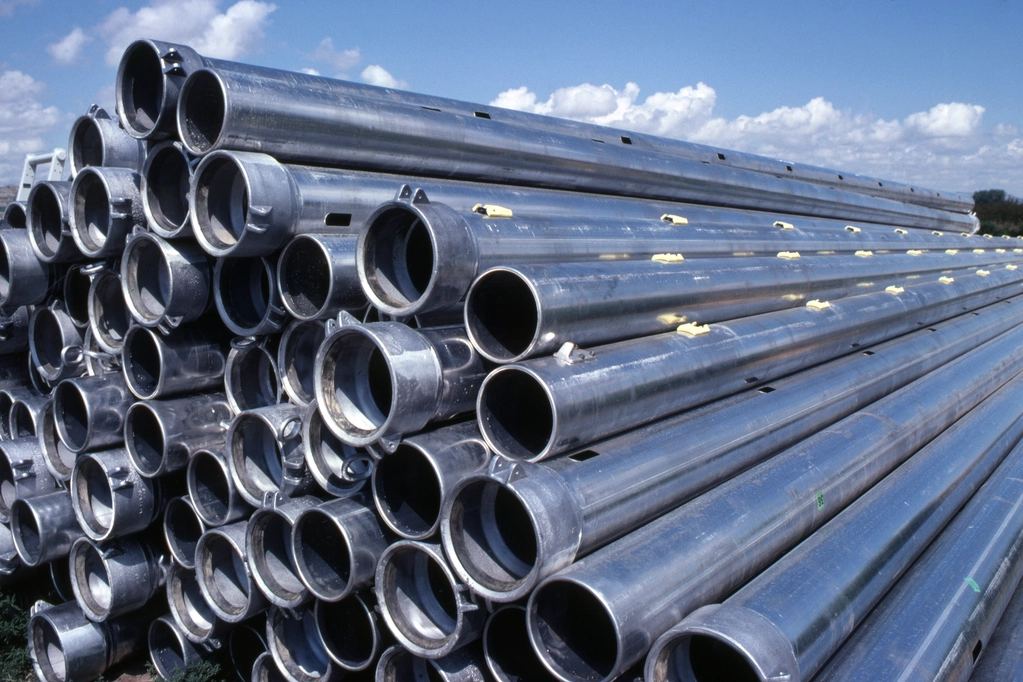
Sheet runs up to just under a quarter inch; at 0.250" and thicker it becomes plate. Bar comes as round, square, flat and hex. Tube comes round, square and rectangular, and structural extrusions cover angle, channel, I-beam and tee. Tread plate is sold by thickness with a raised diamond pattern on one side. Most sheet and plate is sold as full sheets, but you don't have to buy the whole sheet if you only need blanks.
Typical aluminum size ranges
| Form | Commonly available range |
|---|---|
| Sheet | 0.020"–0.249" thick; 36", 48" and 60" wide; 96", 120" and 144" long |
| Plate | 0.250" to 6" thick and up; full plates commonly 48" x 144" and 60" x 144" |
| Round bar | 1/8" to about 12" diameter |
| Flat and rectangle bar | 1/8" to 3" thick, up to about 12" wide |
| Tube (round, square, rectangular) | 1/2" to about 8" across, wall 0.035" to 1/2" |
| Diamond tread plate | 0.025" to 0.250" thick, 48" x 96" to 60" x 144" sheets |
Commonly available ranges. Ask for anything outside them.
Cutting options for aluminum
Bar, tube and extrusions get saw cut to length. Sheet shapes and flat patterns are fastest on a fiber laser, which handles aluminum well in thinner gauges. Thick plate and parts that can't take any heat go to waterjet, which leaves no hardened edge and no warping, the right call for 7075 or anything getting machined after. Plasma works on aluminum but leaves a rougher edge that usually needs cleanup. Tell us the tolerance and we'll match the method on the cut-to-size quote.
Mill certs for aluminum
Aluminum certs list the alloy, temper, chemistry and tested properties against the ASTM spec, usually B209 for sheet and plate and B221 for extruded bar and shapes. Ask for them when a drawing calls out a spec, when parts go to aerospace or government customers, or when your own customer wants proof the 6061 is really T6. We can get mill certs on request with the quote.