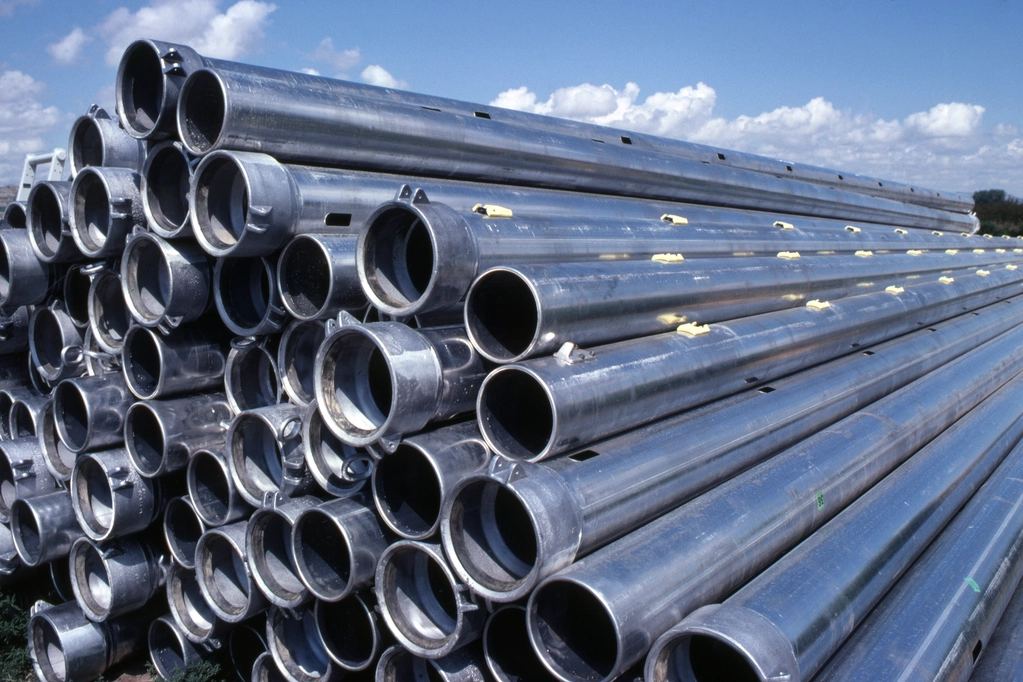
6061 is the general-purpose structural aluminum. It machines clean, welds well, anodizes evenly and is strong enough for brackets, frames, fixtures and machine parts. If a drawing just says "aluminum" and the part gets machined or bolted into a structure, 6061-T6 is usually what the engineer meant. We source 6061 plate, bar, sheet and extrusions and arrange the cut, so it shows up at your door ready to fixture.
What 6061 aluminum is
6061 belongs to the 6xxx series, alloyed mainly with magnesium and silicon. Those two elements form magnesium silicide, which lets the alloy be solution heat treated and aged to a much higher strength than it has annealed. That heat treatment is what the "T" in T6 refers to.
It is the most widely produced heat-treatable aluminum in North America. Plate, round and square bar, flat bar, angle, channel, tube and sheet are all commonly available in 6061, which makes it easy to design around.
6061-T6 properties
| Property | Value | What it means in the shop |
|---|---|---|
| Tensile strength | 45 ksi typical | Plenty for brackets, frames and machine parts |
| Yield strength | 40 ksi typical | Holds shape under load better than 5052 or 3003 |
| Hardness | About 95 Brinell | Takes a clean finish, resists dings better than soft alloys |
| Density | 0.098 lb/in³ (2.70 g/cm³) | About a third the weight of steel for the same size |
| Weldability | Good (TIG and MIG) | Heat-affected zone loses strength; design for it |
| Machinability | Good | Breaks chips well in T6, holds tolerance |
| Corrosion resistance | Good | Fine outdoors; 5052 is better in salt water |
Values are typical for T6 and T651. Mill certs list actual tested values for your heat.
Typical uses
- Machined parts, jigs, fixtures and plates for machine shops
- Structural frames, brackets and gussets
- Trailer and truck-body components, ramps and crossmembers
- Marine hardware above the waterline, towers and rails
- Base plates, manifolds and enclosures that get anodized
Common tempers
T6 is solution heat treated and artificially aged. It is the standard for sheet, bar and extrusions. T651 is T6 plate or bar that has been stretched to relieve internal stress, so it stays flat when you take material off one side. For any plate you plan to pocket or face heavily, order T651. T6511 is the same idea for extrusions.
O is annealed and soft, used when a part needs heavy forming before it is heat treated. T4 is solution treated and naturally aged, sometimes chosen for moderate forming. The aluminum alloy temper guide covers the codes in more depth.
6061 vs 5052 aluminum
Pick 6061 when the part gets machined or needs strength. Pick 5052 when the part gets bent or lives in salt water. 6061-T6 will crack on a tight bend; 5052-H32 folds without complaint. 5052 machines gummy; 6061 cuts clean.
| 6061-T6 | 5052-H32 | |
|---|---|---|
| Tensile / yield (typical) | 45 / 40 ksi | 33 / 28 ksi |
| Tight-radius bending | Poor, cracks | Excellent |
| Machining | Good | Fair, gummy |
| Salt-water corrosion | Good | Excellent |
| Heat treatable | Yes | No |
| Anodizing | Clear and even | Acceptable, can tint yellow |
Welding and machining 6061
6061 welds readily with TIG or MIG. Use 4043 filler for less crack sensitivity and easier flow, or 5356 when you want higher as-welded strength or a better color match after anodizing. Expect the heat-affected zone to drop well below T6 strength, down to roughly 24 ksi tensile as welded, so put welds away from the highest-stress spots or plan to re-heat-treat.
For machining, T6 and T651 are the tempers to run. Annealed 6061 is gummy and builds edge. Sharp carbide or polished HSS, high spindle speed and plenty of coolant give a good finish. Order T651 plate for pocketed parts so they do not potato-chip after roughing.